For many kids — especially children with Autism, ADHD or anxiety — the hardest part of the day isn’t any single activity. It’s the transitions between them: not knowing what’s coming, or when a favorite thing ends. Visual supports fix the “not knowing,” and the difference can be dramatic.
Why pictures work when words don’t
Spoken instructions disappear the moment they’re said. A picture schedule stays put — a child can check it as many times as they need, without asking, without being reminded, and without the anxiety of holding the whole day in their head. Predictability is calming; visuals make the day predictable.
Start with a First/Then board
The simplest visual support is a First/Then board: two pictures, side by side. “First handwashing, then snack.” It answers the only question that matters mid-meltdown — when do I get the good thing? — and it teaches the schedule-reading habit that longer schedules build on.
Build up to a full visual schedule
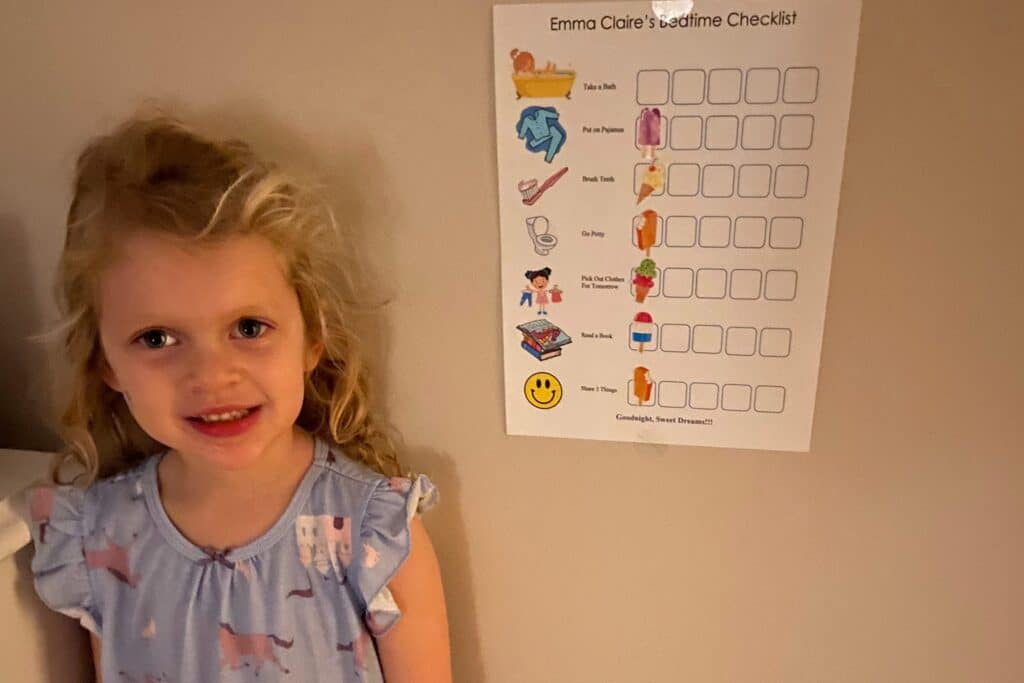
A visual schedule lays out the day (or just the morning routine) as a strip of pictures. A few tips that make them work:
- Keep it where the child can see and touch it — fridge at home, desk or wall at school.
- Let the child check things off or remove each picture as it finishes. That little ritual is half the magic.
- Show changes in advance. If the day is different, change the schedule together and talk it through before it happens.
- Start small. Three or four steps is plenty at first — you can always add more.
Add emotional supports alongside
Schedules handle the what’s next; a feelings chart and a calm-down chart handle the how am I doing. A feelings check-in gives kids words (or pictures) for big emotions before they boil over, and a calm-down scale gives them a concrete menu of what to do at each level — squeeze a pillow, take five breaths, ask for a break.
Motivate with a token board
A token board turns “keep it together through the grocery store” into a visible, winnable game: earn a star for each step, trade a full board for a reward. It works because progress is visible — the child can literally see how close the payoff is.
Use the same tools at home and school
Visual supports work best when they look the same everywhere. If your child’s classroom uses a First/Then board, use one at home with the same pictures. Consistency is what turns a tool into a habit — and it’s an easy win to coordinate at your next parent-teacher conference or IEP meeting.
Make yours in minutes — for FREE!
Our visual resources builders let you create schedules, boards, and charts with a built-in picture library, your own photos, and your child’s actual routine — then print. Every builder also works in English or Spanish, so home and school can match even when they don’t share a language. There’s a full set, from social stories to communication boards, all free.
You don’t need laminators and a Pinterest-perfect setup to start. One First/Then board, used consistently for a week, will tell you everything about whether visual supports will help your child. For most kids, the answer is a very calm yes.