“I don’t know what to write.” Every parent and teacher of a reluctant writer knows that sentence by heart. The good news: reluctance is almost never about ability — it’s about blank-page overwhelm. Shrink the blank, and the words come. Here are ten ways to shrink it.
1. Talk first, write second
Writing is easier when the sentence already exists out loud. Chat about the topic for two minutes, then say: “That thing you just said — write that down.” Speech is the rough draft.
2. Use picture prompts
A picture answers “what do I write about?” before the child has to. A silly image — a dog driving a bus — practically writes its own story. Photos from your own week work just as well.
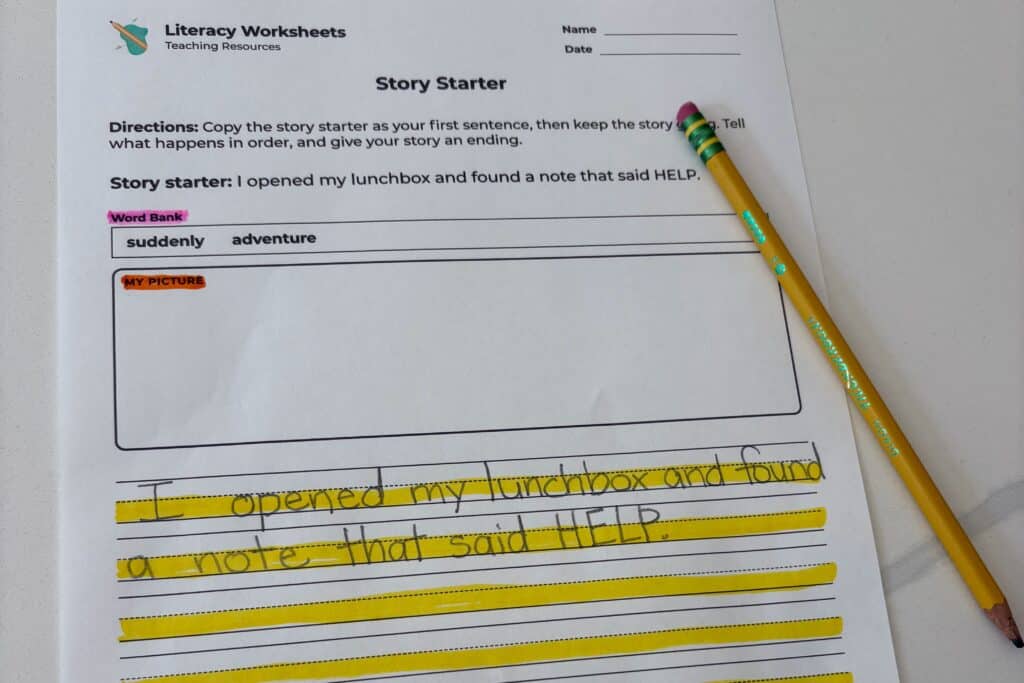
3. Give sentence starters
“My favorite part was…” or “I couldn’t believe it when…” A starter removes the hardest sentence (the first one) and gets the pencil moving.
4. Set tiny goals
“Write three sentences” beats “write a story.” A reluctant writer who finishes feels successful; one who runs out of steam mid-page feels like a failure. Always end on finished.
5. Be the scribe sometimes
Let the child dictate while you write, or trade sentences — they write one, you write one. You’re building the idea muscle and the handwriting muscle separately, so neither exhausts the other.
6. Make it real
Grocery lists, birthday cards, notes to grandma, a sign for their bedroom door. Real writing with a real reader beats an assignment every time — kids write more when writing does something.
7. Give them a word bank
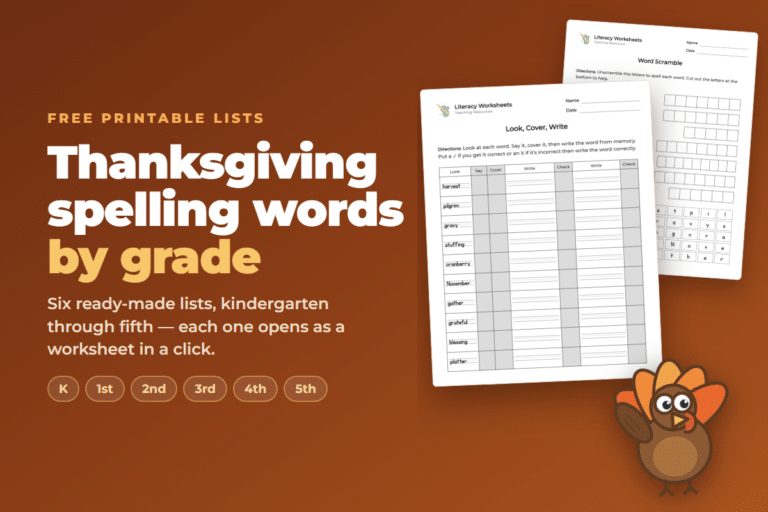
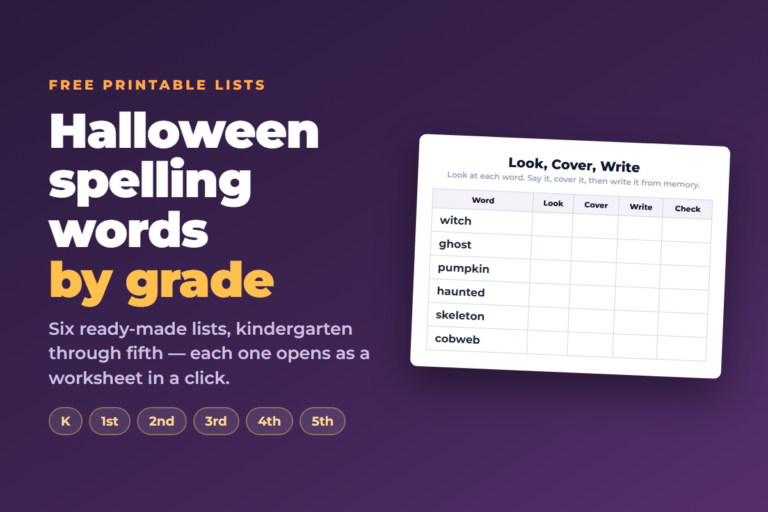
Spelling fear silences a lot of writers. A little bank of topic words to copy from (“beach, waves, sandcastle, seagull”) frees kids to think about ideas instead of letters.
8. Separate ideas from fixing
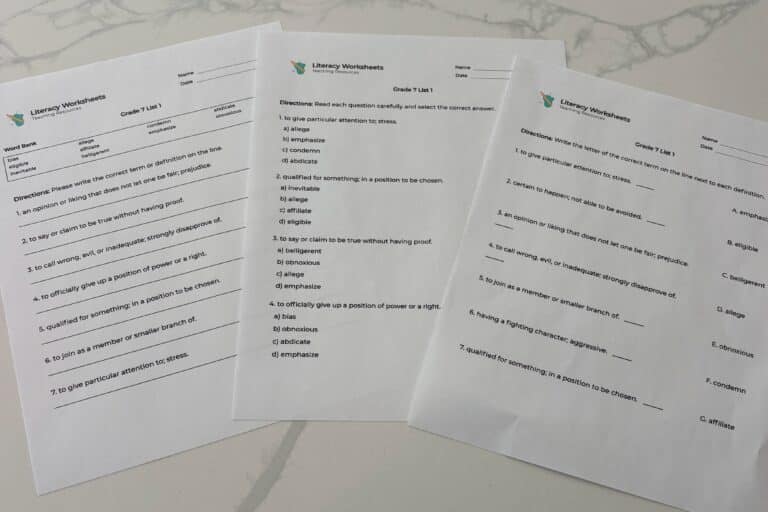
Never correct spelling and grammar during drafting — nothing kills momentum faster. Get the ideas down first; save the fixing for another day. When it’s time, make editing its own skill with proofreading worksheets where kids correct someone else’s sentences — it’s far less personal than red marks on their own work.
9. Build the mechanics quietly in the background
Sentence-level confidence makes page-level writing less scary. Short, focused practice with sentence writing, grammar, and capitalization & punctuation worksheets gives kids tools — five minutes at a time, separate from creative writing.
10. Celebrate the writing, not the handwriting
Read their sentences back to them with enthusiasm. Post stories on the fridge. Ask questions about the story (“Then what did the dog do?!”) rather than pointing at a backwards letter. Kids repeat what gets celebrated.
Pick two or three of these — not all ten — and give them a couple of weeks. You can generate free writing worksheets for every skill above, customized to exactly where your child is. The blank page shrinks fast once someone shows a kid it isn’t so blank after all.